How Salt on Our Sidewalks and Roads Can Harm Fresh Water And What We Can Do About It
Winter brings snow, ice, and the all-too-familiar chore of salting driveways, sidewalks, and streets. It helps keep us safewhen temperatures drop and surfaces freeze, but it also carries an impact many of us might not think about: the health of our freshwater systems.
Recently, Matt Bain, Aquatic Specialist & Education Coordinator with the Grand Valley Metro Council’s Lower Grand River Organization of Watersheds (LGROW), shared an important educational message about how salt use affects water quality — and how we can do better.
Why Salt Matters
When we spread salt, whether on our sidewalks or on city streets, it doesn’t just disappear when the ice melts. Snow and ice meltwater carry that salt into storm drains and straight into creeks, rivers, lakes, and groundwater. Once it’s there, salt doesn’t just wash away, it sticks around.
Here’s what happens:
Salt dissolves quickly in snowmelt and runoff, traveling through storm sewer systems into freshwater ecosystems.
Freshwater salinization increases, meaning waters that should be fresh become saltier over time.
Aquatic life suffers. Many fish, insects, plants, amphibians, and other organisms aren’t adapted to high salt levels and can decline or disappear when chloride concentrations rise.
Drinking water quality can deteriorate and once salt is in the water, it’s very hard and expensive to remove.
And it’s not just the water. Salt spray and runoff can burn vegetation, damage soil, and even corrode infrastructure like roads, bridges, and vehicles.
Salt Doesn’t Work Better if You Use More
One of the most surprising things Matt and watershed professionals emphasize is that more salt doesn’t mean faster or better ice melting. In fact, over-application is common, wasteful, and harmful to the environment and it doesn’t improve safety.
This holds true whether you’re a municipality or a homeowner:
Excess salt just ends up in the environment, not working twice as fast. Often, a smaller, well-targeted amount is more effective.
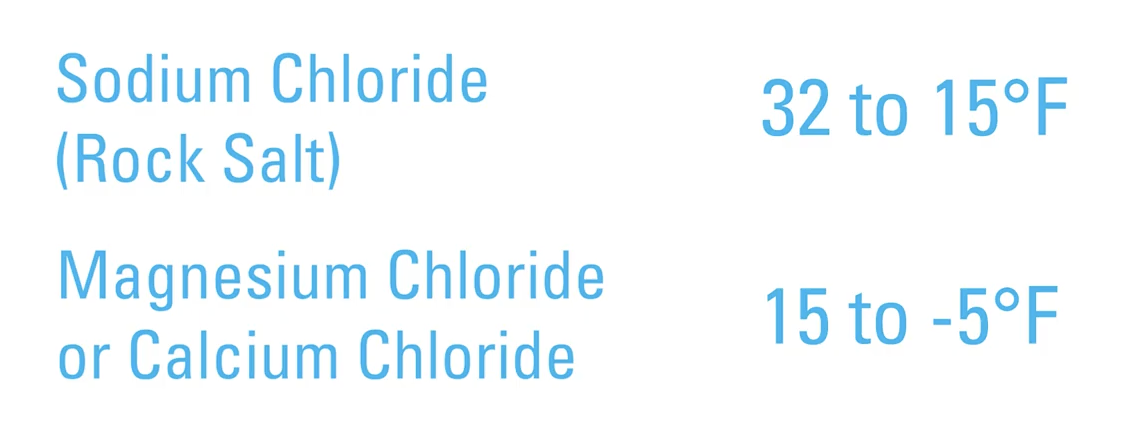
Pay attention to the temperature, salt doesn’t even work at certain temperatures.
Being Salt-Smart Saves Money and Protects Water
Here’s the encouraging part: We can all make better choices.
Matt’s education message isn’t to stop using salt cold turkey, that wouldn’t be practical, but to use it with intention and care.
Tips for Better Salt Use
✔ Shovel first, salt second. Clearing snow before applying salt reduces the amount needed. lgrow.org
✔ Use the right amount. More salt isn’t better salt. Focus on thin, even spread rather than piles.
✔ Consider alternatives. Sand or other traction agents can help improve safety without adding chlorides.
✔ Be conscious of placement. Avoid piling salty snow near vegetation or drainage areas leading directly to waterways
Why It Matters for Us in West Michigan
We live in the Great Lakes watershed, one of the most important freshwater regions on Earth. Keeping our lakes, rivers, and streams clean isn’t just about aesthetics, it’s about protecting habitat, drinking water, recreation, and future generations.
By being salt-smart this winter, we can:
Reduce stress on aquatic ecosystems
Protect drinking water supplies
Save money on salt and cleanup costs
Demonstrate stewardship in our communities
Like many things in life, more doesn’t always mean better. When it comes to salt, whether on our sidewalks, driveways, or streets, thoughtful use is not only smarter but also kinder to the freshwater systems we depend on.
Thank you to Matt Bain and the team at LGROW for spreading this important message. Let’s all take a step toward more responsible winter practices and help protect the waters that connect us all.